
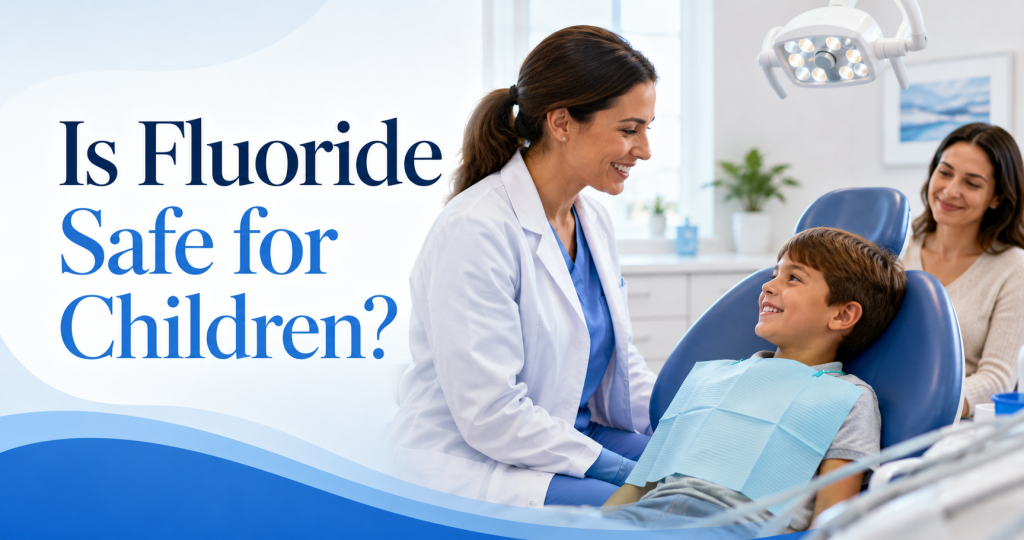
Is fluoride safe for children? It’s one of the first questions parents ask at Adamsville Family Dentistry — and after more than seven decades of scientific research, the answer is a clear yes when fluoride is used in the right amounts at the right ages. Understanding the facts helps you make confident, informed decisions at every stage of your child’s dental development.
Fluoride works by bonding with tooth enamel at the molecular level, making it significantly more resistant to the acids that bacteria produce after eating. Whether your child is two or twelve, fluoride is one of the most proven tools available for preventing cavities — but how much is appropriate, and when, makes all the difference. Below are the questions parents ask us most often, followed by a closer look at the science behind this important mineral.
Fluoride and Children: Your Questions Answered
Is fluoride safe for babies and toddlers?
Yes, in age-appropriate amounts. The American Dental Association (ADA) recommends a smear of fluoride toothpaste — about the size of a grain of rice — for children under three, beginning when the first tooth appears. Children ages three through six can use a pea-sized amount. These small quantities are safe even if accidentally swallowed. If your home relies on well water rather than fluoridated municipal water, ask your dentist whether fluoride supplements are right for your child.
What is dental fluorosis, and should I be worried?
Dental fluorosis is a cosmetic condition — typically appearing as faint white spots or streaks on permanent teeth — that can occur when a child is exposed to too much fluoride while teeth are still forming beneath the gums, generally from birth through age eight. Mild fluorosis only affects appearance and is not a health risk. It is most often caused by children swallowing large amounts of toothpaste, which is why using the correct amount for each age group is so important. Severe fluorosis is rare in communities with properly regulated water fluoridation.
Does fluoride in drinking water cause harm?
No. Community water fluoridation has been studied extensively for over 75 years and is recognized as safe by the Centers for Disease Control (CDC), the World Health Organization (WHO), and the ADA. The recommended concentration of 0.7 mg/L is carefully regulated to maximize cavity protection while minimizing any risk of fluorosis.
How often should my child get a fluoride treatment at the dentist?
Most children benefit from a professional fluoride varnish application every six months during their routine cleaning visit. For children at higher risk for cavities — due to diet, dry mouth, or a history of tooth decay — your dentist may recommend treatments more frequently. In-office fluoride varnish contains a much higher concentration than toothpaste and provides durable, long-lasting protection after a quick, painless application.
My child drinks mostly bottled water. Are they missing out on fluoride?
Most bottled water does not contain fluoride, so children who drink primarily bottled water may not receive the same protective benefits as those who drink fluoridated tap water. In these situations, your dentist may recommend prescription fluoride supplements or additional in-office varnish applications. Mention this at your next visit and we’ll assess your child’s total fluoride exposure and recommend accordingly.
Are there children who should not use fluoride?
Fluoride is safe for the vast majority of children when used correctly and in age-appropriate amounts. Children with certain kidney conditions may need individualized guidance, as fluoride is processed through the kidneys. If you have specific health concerns about your child, share them with both your dentist and your child’s physician so they can coordinate the best preventive approach together.
What Fluoride Is and How It Protects Teeth
Fluoride is a naturally occurring mineral found in soil, water, and many foods. When developing teeth are regularly exposed to fluoride — through water, food, dental products, or professional treatments — the mineral integrates into the enamel structure, creating a harder, more acid-resistant surface.
This process, called remineralization, can actually reverse microscopic early-stage damage before it progresses into a full cavity. Think of fluoride as both a daily shield and an ongoing repair system for your child’s teeth. Used consistently and correctly from infancy, it is one of the most cost-effective preventive measures in all of dentistry.
What the Research Says
The safety and effectiveness of fluoride is among the most thoroughly studied topics in dental science. The ADA, the American Academy of Pediatrics (AAP), and the WHO all endorse fluoride as safe and effective for children at recommended levels.
A major review by the Cochrane Collaboration found that water fluoridation reduces tooth decay in children by up to 35%. Professional fluoride varnish has been shown to reduce cavities in primary (baby) teeth by approximately 37%. The evidence is consistent, extensive, and backed by generations of research — fluoride, used correctly, is one of the most effective preventive tools in dentistry.
Age-by-Age Fluoride Guide for Parents
| Age | Toothpaste Amount | Notes |
|---|---|---|
| 0–6 months | None needed | Wipe gums with a soft, damp cloth |
| 6 months–3 years | Grain-of-rice smear | Start when first tooth erupts |
| 3–6 years | Pea-sized amount | Supervise and teach spitting |
| 6 years and up | Pea-sized amount | Adult supervision still helpful |
Professional fluoride varnish is safe for children of all ages, including infants, and can be applied at both dental and well-child visits. Choose a fluoride toothpaste with the ADA Seal of Acceptance, and supervise brushing until children can reliably spit on their own — usually around age six.
Four Key Fluoride Tips for Parents
Use the Right Amount
A grain-of-rice smear for children under three; a pea-sized amount for ages three and up. More is not better — stick to the recommended quantity every time.
Choose ADA-Approved Products
Look for the ADA Seal of Acceptance on your child’s toothpaste. This confirms the product contains the right fluoride concentration and meets safety standards.
Schedule Twice-Yearly Visits
Professional fluoride varnish at every cleaning visit is one of the simplest and most effective ways to keep cavities at bay — especially for children prone to tooth decay.
Know Your Water Source
If your family uses well water or primarily drinks bottled water, ask your dentist about your child’s fluoride exposure. Supplements or extra in-office treatments may be recommended.
Professional Fluoride Treatments at Our Office
At Adamsville Family Dentistry, fluoride varnish is a standard part of every child’s preventive care visit. The application is fast, comfortable, and completely painless — your child can eat and drink normally within 30 minutes. For children with a history of cavities, enamel defects, or other risk factors, we’ll discuss additional protective options and build a prevention plan tailored specifically to them.
Our pediatric dental services are designed to make every visit positive and stress-free, building healthy habits and strong smiles from an early age. We also offer SOLEA laser dentistry for children who need gentle, drill-free treatment, and sedation options for children who experience anxiety at dental visits.
Ready to Protect Your Child's Smile?
Schedule a preventive visit today and let our team create a personalized fluoride plan for your child — from their very first tooth through the teen years and beyond.
Adamsville Family Dentistry
518 East Main St. · Adamsville, TN 38310 · (731) 632-3371
Give Your Child the Gift of a Cavity-Free Smile
Our team is here to answer every fluoride question and build a prevention plan that grows with your child.