
Why Are My Gums Bleeding When I Brush? Causes & Treatment
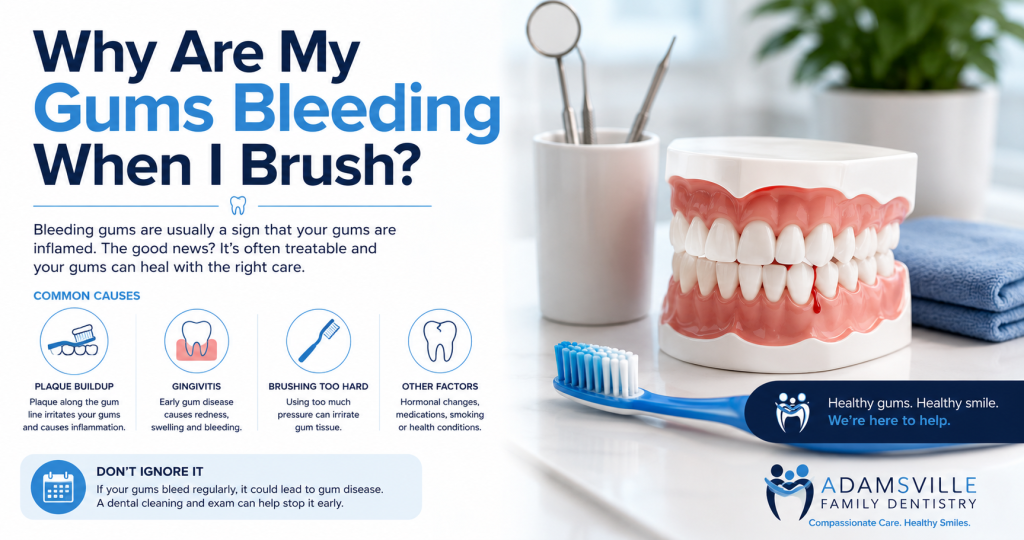
“Why are my gums bleeding when I brush?” It’s one of the most common questions we hear at our office — and if you’ve noticed pink in the sink after brushing or flossing, your body is trying to tell you something. Bleeding gums are usually a sign that your gums are inflamed, most often because of plaque building up along the gum line. The good news? In its early stages, gum inflammation is very treatable, and with the right care your gums can heal completely.
At Adamsville Family Dentistry, we help patients throughout McNairy County get to the bottom of bleeding gums every week — and in most cases, the fix is simpler than people fear. Below, we’ve answered the questions patients ask us most, followed by a closer look at what causes bleeding gums, how to help them heal at home, and when it’s time to let a dentist step in.
Bleeding Gums: Your Questions Answered
Why are my gums bleeding when I brush?
The most common reason is inflammation caused by plaque — a sticky film of bacteria that collects along the gum line. When plaque isn’t fully removed by brushing and flossing, it irritates the gum tissue, making it red, swollen, and quick to bleed. Other causes include early gum disease (gingivitis), brushing too aggressively, hormonal changes, certain medications, and some health conditions. A dental exam can pinpoint the exact cause.
Is it ever normal for gums to bleed a little?
No — healthy gums should not bleed during normal brushing or flossing. An occasional spot of blood after starting a new flossing routine can happen as your gums adjust, but bleeding that occurs regularly, even lightly, is a sign of inflammation that deserves attention. Think of it like any other part of your body: if your hands bled every time you washed them, you’d want to know why.
What is gingivitis, and how do I know if I have it?
Gingivitis is the earliest stage of gum disease. It develops when plaque along the gum line triggers inflammation. Common signs include gums that are red rather than pink, puffiness or swelling, tenderness, bleeding when you brush or floss, and persistent bad breath. Gingivitis is fully reversible with a professional cleaning and improved home care — which is exactly why catching it early matters so much.
Can brushing too hard make my gums bleed?
Yes. Scrubbing with heavy pressure or using a hard-bristled toothbrush can injure gum tissue and cause bleeding — and over time it can even push your gums to recede. Switch to a soft-bristled brush, use gentle circular motions, and let the bristles do the work. If your toothbrush bristles splay out within a few weeks, that’s a sign you’re pressing too hard.
Will bleeding gums go away on their own?
Sometimes — if the cause is minor irritation and you improve your brushing and flossing habits, mild bleeding may resolve within a week or two. But if plaque has hardened into tartar (calculus), no amount of home brushing can remove it; it must be professionally cleaned away. Bleeding that continues for more than one to two weeks despite good home care is your cue to schedule a dental visit.
Should I stop brushing or flossing if my gums bleed?
No — please don’t! This is one of the most common mistakes we see. Avoiding the bleeding areas allows more plaque to accumulate, which makes the inflammation worse. Instead, keep brushing gently twice a day with a soft-bristled brush and floss daily. Consistent, gentle cleaning is exactly what inflamed gums need to begin healing.
Can medications or health conditions cause bleeding gums?
Yes. Blood thinners and some other medications can make gums bleed more easily. Hormonal changes during pregnancy, puberty, or menopause can increase gum sensitivity. Conditions such as diabetes and vitamin deficiencies can also affect gum health, and smoking masks bleeding while quietly worsening gum disease. Always share your full health history with your dentist — it helps us understand the whole picture.
When should I see a dentist about bleeding gums?
Schedule a visit if your gums bleed regularly for more than a week or two, if they’re swollen or tender, if you notice persistent bad breath, if your gums appear to be pulling away from your teeth, or if any tooth feels loose. And if bleeding is heavy, spontaneous, or accompanied by pain or swelling in your face, call us promptly — our office also provides emergency dentistry when you need same-day answers.
How are bleeding gums and gum disease treated?
Treatment depends on how far things have progressed. For gingivitis, a professional cleaning to remove plaque and tartar — plus improved home care — is usually all it takes. If gum disease has advanced, we may recommend a deeper cleaning below the gum line (scaling and root planing). Our office also offers gentle, advanced options like SOLEA laser treatment, which can address gum tissue with less discomfort and faster healing than traditional methods.
How can I keep my gums from bleeding in the future?
Healthy gums come from consistent habits: brush gently twice a day with a soft-bristled or electric toothbrush, floss once daily, drink plenty of water, limit sugary snacks, and avoid tobacco. Just as important — keep up with regular dental cleanings and exams, because professional care removes the hardened tartar that home brushing can’t. Most patients do best with a cleaning every six months.
What Bleeding Gums Are Really Telling You
Bleeding is your gums’ alarm system. Gum tissue is rich in tiny blood vessels, and when bacteria in plaque irritate that tissue, your immune system rushes blood to the area to fight the irritation. The result is gums that look redder, feel puffier, and bleed at the slightest touch of a toothbrush or floss.
Here’s the encouraging part: bleeding at this stage usually means the problem is still early. Gum inflammation exists on a spectrum, and where you are on that spectrum determines how easily it can be reversed. It also helps to know that you’re in good company: gum inflammation is one of the most common conditions dentists see, affecting a large share of American adults at some point. Common, however, doesn’t mean harmless. Acting now — rather than waiting for pain — is what keeps a small, fixable issue from becoming a long-term one.
The 4 Most Common Causes of Bleeding Gums
1. Plaque Buildup
Plaque along the gum line irritates your gums and triggers inflammation. Within days, missed plaque begins hardening into tartar, which clings to teeth and can only be removed with a professional cleaning.
2. Gingivitis
Early gum disease causes redness, swelling, and bleeding. It’s extremely common — and completely reversible with professional care and good home hygiene.
3. Brushing Too Hard
Too much pressure or hard bristles can injure gum tissue directly. Gentle technique with a soft brush cleans just as effectively without the damage.
4. Other Factors
Hormonal changes, medications like blood thinners, smoking, diabetes, and nutritional deficiencies can all make gums more prone to bleeding.
Gingivitis vs. Periodontitis: Why Early Action Matters
Left untreated, gingivitis can progress into periodontitis — a more serious infection that damages the bone supporting your teeth. Understanding the difference makes it clear why bleeding gums shouldn’t be ignored:
| Gingivitis (Early) | Periodontitis (Advanced) | |
|---|---|---|
| What’s affected | Gum tissue only | Gums, bone, and tooth-supporting ligaments |
| Common signs | Redness, swelling, bleeding when brushing | Receding gums, persistent bad breath, loose teeth, pockets around teeth |
| Reversible? | Yes — fully reversible | Manageable, but bone loss is permanent |
| Typical treatment | Professional cleaning + home care | Deep cleaning (scaling & root planing), laser therapy, ongoing periodontal maintenance |
The takeaway is simple: the earlier we see you, the easier — and less expensive — treatment tends to be. Gingivitis caught at a routine cleaning is a minor course correction. Periodontitis is a lifelong management project.
How to Help Bleeding Gums at Home
While a dental visit is the only way to remove hardened tartar and confirm what’s going on, these habits give your gums the best chance to heal:
- Brush gently twice a day with a soft-bristled toothbrush, angling the bristles toward the gum line in small circular motions
- Floss once daily — curve the floss into a “C” shape against each tooth and slide gently below the gum line
- Rinse with warm salt water (half a teaspoon of salt in a cup of warm water) to soothe irritated tissue
- Stay hydrated — saliva is one of your mouth’s natural defenses against plaque bacteria
- Eat a balanced diet rich in vitamin C and calcium, and limit sugary snacks and drinks that feed plaque bacteria
- Avoid tobacco, which restricts blood flow to the gums and hides the warning signs of gum disease
Give these habits one to two weeks. If your gums are still bleeding, it’s time to let us take a look — there’s likely tartar below the gum line that needs professional attention.
7 Signs It's Time to See a Dentist About Your Gums
Home care solves many cases of mild gum irritation — but some signs mean it’s time to let a professional take a look. Schedule a visit if you notice any of the following:
- Bleeding that persists for more than one to two weeks despite gentle, consistent brushing and flossing
- Gums that are swollen, tender, or deep red instead of firm and pink
- Persistent bad breath or a bad taste that doesn’t improve with brushing
- Gums pulling away from your teeth, making teeth look longer than they used to
- New sensitivity along the gum line to hot, cold, or sweets
- A tooth that feels loose or a change in how your teeth fit together when you bite
- Bleeding that is heavy or happens on its own, without brushing or flossing
None of these signs means it’s too late — they simply mean it’s time. The sooner we can evaluate your gums, the more conservative and affordable your treatment is likely to be.
3 Myths About Bleeding Gums (That Make Things Worse)
Myth #1: “A little blood is normal.” It’s common, but it isn’t normal. Healthy gums don’t bleed during routine brushing. Treating bleeding as ordinary is the main reason gingivitis gets the time it needs to progress.
Myth #2: “I should brush and floss less until it heals.” The opposite is true. Backing off allows plaque to build, which fuels the inflammation. Gentle, consistent cleaning is the treatment, not the threat.
Myth #3: “If it doesn’t hurt, it isn’t serious.” Gum disease is famously quiet — it can advance significantly with little or no pain. Bleeding is often the only early warning you’ll get, which is exactly why it deserves attention.
Bleeding Gums at Different Stages of Life
Gum health isn’t one-size-fits-all — certain seasons of life make gums more prone to bleeding, and knowing what’s typical for your stage helps you respond wisely.
Children and Teens
When kids’ gums bleed, the culprit is almost always rushed or inconsistent brushing — plaque simply isn’t being cleaned away at the gum line. Erupting adult teeth and orthodontic appliances can add irritation, too. The fix is usually better technique, not worry: a soft brush, two full minutes twice a day, and regular checkups where we make hygiene coaching fun instead of a lecture.
Pregnancy
Many expectant mothers notice tender, bleeding gums — often called pregnancy gingivitis — because hormonal changes make gum tissue react more strongly to even small amounts of plaque. Dental cleanings are considered safe and important during pregnancy, and keeping gums healthy is part of caring for your overall health during those nine months. If you’re expecting, let us know at your visit so we can tailor your care.
Older Adults
Dry mouth from common medications, dexterity challenges that make flossing harder, and years of accumulated tartar can all raise the risk of bleeding gums later in life. Electric toothbrushes, floss holders or water flossers, and slightly more frequent professional cleanings often make a dramatic difference.
Your Gums and Your Overall Health
Your mouth doesn’t exist in isolation. Research has linked ongoing gum disease with broader health concerns, including associations with heart health and blood sugar control in people with diabetes. Inflamed, bleeding gums also give oral bacteria easier access to the bloodstream. None of this means bleeding gums should cause panic — but it does mean gum health is genuinely part of whole-body health, and treating inflammation early is a simple investment in both your smile and your wellbeing.
Don't Ignore It
If your gums bleed regularly, it could be the first stage of gum disease — and early gum disease is the easy stage to treat. A simple cleaning and exam can stop it before it ever threatens your teeth. One short visit now can save you years of complex care later.
How We Treat Bleeding Gums at Adamsville Family Dentistry
When you visit our office with bleeding gums, we start by listening — to your symptoms, your habits, and your health history. Then we examine your gums, measure any pockets around your teeth, and use advanced diagnostics like 3D Cone Beam imaging when we need a complete picture of the bone supporting your teeth. From there, your treatment may include:
- Professional cleaning to remove the plaque and tartar driving the inflammation
- Scaling and root planing — a comfortable deep cleaning beneath the gum line for more advanced cases
- SOLEA laser dentistry — a gentle, precise option for treating gum tissue with minimal discomfort and faster healing
- Sedation options for patients whose anxiety has kept them away from the dental chair
- Personalized home-care coaching so the results of your treatment actually last
We care for every age in the family, too — bleeding gums in kids are usually a brushing-habit issue, and our pediatric dentistry team makes gum health education friendly instead of frightening. Families from Adamsville, Selmer, Ramer, Stantonville, Michie, Guys, and across McNairy County trust us to treat gum problems with honesty, gentleness, and modern technology.
Visit Adamsville Family Dentistry
Address: 518 East Main St., Adamsville, TN 38310
Phone: (731) 632-3371
Hours: Mon–Wed 8AM–5PM | Thu 7:30AM–2:30PM | Fri 8AM–12PM
Healthy Gums. Healthy Smile. We're Here to Help.
Bleeding gums are a warning — not a life sentence. Schedule a cleaning and exam with Adamsville Family Dentistry today, and let’s get your gums healthy again while it’s still simple.